

What if the key to rebuilding your life after a devastating accident lies not just in medical care, but in strategic legal guidance? Many don’t realize how profoundly specialized advocacy can shape recovery outcomes.
When facing life-altering challenges, local expertise matters. Our team combines decades of experience with a deep understanding of state-specific laws. We’ve seen how timely action strengthens cases – from preserving evidence to securing expert testimonies.
Client stories reveal patterns: those who partner with dedicated professionals often achieve better access to rehabilitation resources. One recent review noted, “They fought tirelessly so I could focus on healing.” This collaborative approach integrates medical insights with legal strategy, ensuring every angle supports your recovery journey.
Free consultations allow us to evaluate your situation without upfront costs. If we take your case, you pay nothing unless we win. Immediate assistance is available at (915) 233-6427 – because waiting risks both health and legal options.
Table of Contents
Key Takeaways
- Local legal teams understand regional court systems and injury valuation methods
- Proven results come from blending medical knowledge with litigation experience
- Contingency-based services remove financial barriers to quality representation
- Early case development preserves critical evidence and witness accounts
- Multidisciplinary partnerships strengthen compensation claims
Understanding Traumatic Brain Injuries
Nearly 3 million Americans require medical care for head trauma annually, according to CDC data. These events range from brief disorientation to life-changing impairments, demanding urgent attention even when symptoms seem minor.
What Defines This Condition
A traumatic brain injury occurs when sudden force disrupts normal neural function. Mild cases might involve temporary confusion or headaches, while severe instances can cause prolonged unconsciousness. Key distinction: Concussions typically resolve within weeks, but deeper tissue damage often requires specialized rehabilitation.
Modern diagnostics use CT scans for quick bleeding detection and MRIs for detailed soft-tissue analysis. However, some neural changes evade imaging – doctors now combine cognitive tests with advanced biomarkers for clearer assessments.
Long-Term Impact and Recovery
Approximately 15% of patients report persistent issues like memory gaps or mood changes five years post-injury. New therapies harness neuroplasticity through targeted exercises and medication regimens. Early intervention proves critical – those starting treatment within 48 hours show 30% better functional outcomes.
Emerging technologies like diffusion tensor imaging map nerve fiber damage previously undetectable. These tools help tailor recovery plans while strengthening legal claims through precise medical documentation.
Common Causes of Traumatic Brain Injury
Life can change in seconds when forces collide with unprotected heads. While sports headlines often highlight concussions, most incidents occur during routine activities. Understanding these risks helps prevent harm and strengthens legal responses when prevention fails.
Accidents and Vehicle Collisions
Motor vehicle crashes remain a top trigger for head trauma. Even airbag-equipped cars can’t always prevent skull impacts during side collisions or rollovers. Recent data shows 20% of hospitalized patients with neural damage came from roadway incidents.
Whiplash motions alone can stretch nerve fibers, causing hidden damage. A delivery driver’s case proved this when routine braking caused his head to strike the cab wall, leading to chronic dizziness.
Slip & Fall and Workplace Mishaps
Uneven surfaces claim more victims than people realize. Grocery store aisles, construction sites, and poorly lit staircases become danger zones when property owners neglect maintenance. One warehouse worker suffered memory loss after tripping on loose flooring.
Falls from heights under six feet still generate enough force to fracture skulls. OSHA reports link 25% of occupational neural injuries to dropped tools or unstable ladders.
These situations often involve preventable errors. Specialized brain injury lawyers analyze safety records and building codes to prove negligence. Their expertise helps secure funds for treatments that restore independence after life-altering events.
Symptoms and Diagnosis of Brain Injuries
Head trauma often leaves invisible scars that reshape lives silently. Recognizing warning signs quickly can mean the difference between recovery and lasting complications. Immediate action helps document damage for both medical and legal needs.
Key Symptoms to Watch For
Physical and cognitive changes appear within hours or days after impact. Common indicators include:
| Symptom Type | Common Signs | Hidden Risks |
|---|---|---|
| Physical | Headaches, nausea, dizziness | Delayed seizures |
| Cognitive | Memory loss, confusion | Personality shifts |
| Sensory | Blurred vision, ringing ears | Chronic fatigue |
Never ignore mild symptoms: A warehouse worker once dismissed headaches only to later suffer brain swelling. Doctors confirmed bleeding through emergency scans.
Diagnostic Methods: CT, MRI and Beyond
Modern tools reveal what eyes can’t see. CT scans detect skull fractures in minutes, while MRIs map soft tissue damage. Some clinics now use advanced EEGs to track neural activity patterns.
Those who’ve suffered brain trauma need thorough testing – 40% of cases show normal scans initially but develop issues weeks later. Combining blood tests with cognitive assessments creates stronger medical records for recovery plans.
Seek help if you experience worsening balance or speech difficulties. Early documentation strengthens both health outcomes and potential compensation claims.
Finding a Traumatic Brain Injury Attorney Near Me
Securing specialized legal help early ensures your rights are protected from the start. Local professionals know regional court procedures and injury valuation methods that impact compensation. This knowledge often makes the difference between covering basic bills and securing lifelong care funds.

Specialized lawyers differ from general practitioners through their focused training. They maintain networks with neurologists and rehabilitation experts to build stronger claims. Consider these key contrasts when choosing representation:
| Focus Area | Case Strategy | Resources |
|---|---|---|
| General Practice | Broad legal knowledge | Limited medical connections |
| Specialized Law | Tailored injury analysis | Expert witness partnerships |
During consultations, ask about their success with similar cases. Top firms often provide free evaluations – use these meetings to assess their communication style and track record. Note how they explain complex terms; clarity signals experience.
Local teams understand hidden factors like regional jury tendencies or insurance adjuster tactics. One client’s case succeeded because their lawyer knew specific judges prefer video evidence over written reports. This insight shaped their evidence collection approach.
Remember: You’re not just hiring a legal expert but a partner in recovery. Proximity matters for frequent meetings and quick evidence preservation. Immediate help ensures deadlines don’t compromise your rights – some states limit claims to three years post-accident.
Expert Legal Support for Brain Injury Cases
Navigating complex injury claims requires more than legal knowledge—it demands strategic precision. Specialized teams combine medical expertise with courtroom experience to protect clients’ futures. Their approach transforms confusing processes into clear paths toward recovery.
How Specialized Teams Maximize Results
Thorough damage analysis forms the foundation of successful claims. Experts review medical bills, lost income projections, and lifestyle impacts. One recent case secured $2.1 million by proving how cognitive changes affected a teacher’s career longevity.
Seasoned professionals develop compelling evidence packages. They gather accident reports, witness statements, and treatment records within days. This swift action preserved critical security footage in a warehouse incident last month.
Negotiation strategies differ significantly between general and specialized practices:
| Approach | Standard Firm | Specialized Team |
|---|---|---|
| Evidence Collection | Basic documentation | Forensic reconstruction |
| Settlement Focus | Immediate offers | Lifetime care costs |
Our firm’s $85 million recovery history shows this methodology works. Contingency-based services ensure everyone accesses quality representation. Partners work closely with neurologists to translate medical findings into legal arguments.
Every case receives personalized attention—from initial consultation to final resolution. This dedication helps clients secure compensation covering advanced therapies and adaptive technologies. Immediate action preserves crucial deadlines while building unshakable claims.
Steps to Take After Suffering a Brain Injury
Swift action following head trauma can significantly influence both health outcomes and legal rights. Quick decisions in the first 72 hours often determine access to critical resources and compensation opportunities.
Immediate Medical Attention and Evidence Gathering
Visit a healthcare provider within 24 hours – even if symptoms seem mild. Delayed treatment accounts for 40% of worsened neural conditions. Bring accident details to your appointment, including:
- Time and location of incident
- Witness contact information
- Photos of hazards or injuries
Preserve physical evidence like damaged helmets or clothing. Request copies of all medical reports – these become foundational for both treatment plans and legal arguments.
Documenting Your Injury and Its Impact
Start a daily journal tracking cognitive changes and physical limitations. Note missed workdays, therapy sessions, and family responsibilities affected by your condition. This creates a timeline showing how the injury disrupts daily life.
Example: A construction worker documented his balance issues through smartphone videos, which helped secure workplace accommodation funds.
Share records only with your legal team before insurance discussions. Early consultation prevents missteps – 30% of initial claims get denied due to poorly worded statements. Proper documentation turns subjective experiences into verifiable facts courts recognize.
How Brain Injury Attorneys Secure Full Compensation
Securing fair compensation after a life-altering event requires meticulous calculation of both visible and hidden costs. Legal teams analyze current medical bills alongside projected expenses like rehabilitation and adaptive equipment. One recent case involved $1.2 million for future home modifications and assistive technologies.
Three core components shape damage evaluations:
- Documented treatment costs (ambulance fees to neurosurgery)
- Lost earning capacity using vocational experts
- Pain/suffering quantified through psychological assessments
Insurance negotiations demand strategic preparation. Adjusters initially offered $300k for a warehouse incident – attorneys countered with security footage and economic projections to secure $2.8 million. Specialists use this comparative approach:
| Factor | Insurer Calculation | Attorney Analysis |
|---|---|---|
| Future Care | Basic projections | Lifetime cost models |
| Lost Wages | Current salary | Career trajectory estimates |
Medical experts transform complex injuries into compelling narratives. Neurologists testify about cognitive declines, while life care planners map decades of needs. This collaboration helped a teacher obtain $3.4 million after a car crash impaired her speech.
Thorough documentation proves indispensable. Daily symptom logs and therapy records converted a denied claim into a $1.9 million settlement. Every prescription receipt and missed workday builds unassailable evidence chains.
Proven teams leave no loss unaddressed – from canceled vacations to altered family roles. Their precision turns personal tragedies into actionable justice.
Proving Negligence in Traumatic Brain Injury Claims
Building a strong legal claim requires connecting specific actions to measurable harm. Four elements must be proven: duty of care, breach of that duty, causation, and damages. Each component acts like puzzle pieces – miss one, and the case collapses.
Establishing Duty of Care and Breach
Duty of care means the responsible party owed you reasonable protection from harm. Drivers must follow traffic laws, while property owners maintain safe environments. A breach occurs when they fail this obligation – like ignoring wet floor warnings in stores.
| Component | Definition | Example |
|---|---|---|
| Duty | Legal responsibility to prevent harm | Employer ensuring equipment safety |
| Breach | Failure to meet standards | Unrepaired machinery defects |
| Causation | Direct cause-effect relationship | Defect leads to equipment failure |
| Damages | Quantifiable losses | Medical bills + lost income |
Demonstrating Causation and Damages
Proving causation requires medical evidence linking the incident to neural harm. Blood tests showing elevated biomarkers after a collision can demonstrate this connection. Time-sensitive documentation like accident scene photos or witness statements often makes this process easier.
Damages extend beyond hospital bills. Track:
- Missed workdays affecting career growth
- Ongoing therapy costs
- Home modification expenses
Seasoned legal teams use vocational experts to calculate lifetime earning losses. One recent case secured $850k by proving how memory issues ended a nurse’s career. Immediate evidence collection preserves critical details before memories fade or security tapes get erased.
Cutting-Edge Medical Evidence in TBI Litigation
Modern technology revolutionizes how legal teams prove complex medical conditions. Advanced neuroimaging now reveals microscopic damage that standard scans miss. This scientific leap helps survivors demonstrate hidden harm when traditional methods fall short.
Visualizing the Invisible
Specialized MRI techniques like diffusion tensor imaging track nerve fiber disruptions. Magnetoencephalography maps electrical impulses to pinpoint malfunctioning regions. These tools create compelling visual evidence for cases involving cognitive decline or chronic pain.
| Technique | Capability | Legal Impact |
|---|---|---|
| Traditional CT Scan | Detects bleeding/swelling | Basic injury confirmation |
| Advanced DTI | Shows nerve pathway damage | Proves lasting impairment |
| MEG Analysis | Identifies abnormal brain activity | Links symptoms to trauma |
Expert witnesses translate complex data into clear courtroom narratives. Neurologists explain how specific scan results correlate with memory loss or balance issues. This approach recently helped secure $4.2 million for a mechanic whose initial scans appeared normal.
Legal teams combine these findings with daily symptom journals and vocational assessments. Together, they build unshakable proof of life-altering consequences. This strategy effectively counters claims that minor head trauma causes only temporary effects.
Working With Experienced Injury Lawyers
How does personalized legal support transform recovery journeys after life-altering events? Seasoned professionals combine technical expertise with compassionate guidance to protect what matters most. Their approach turns complex challenges into manageable steps toward healing.
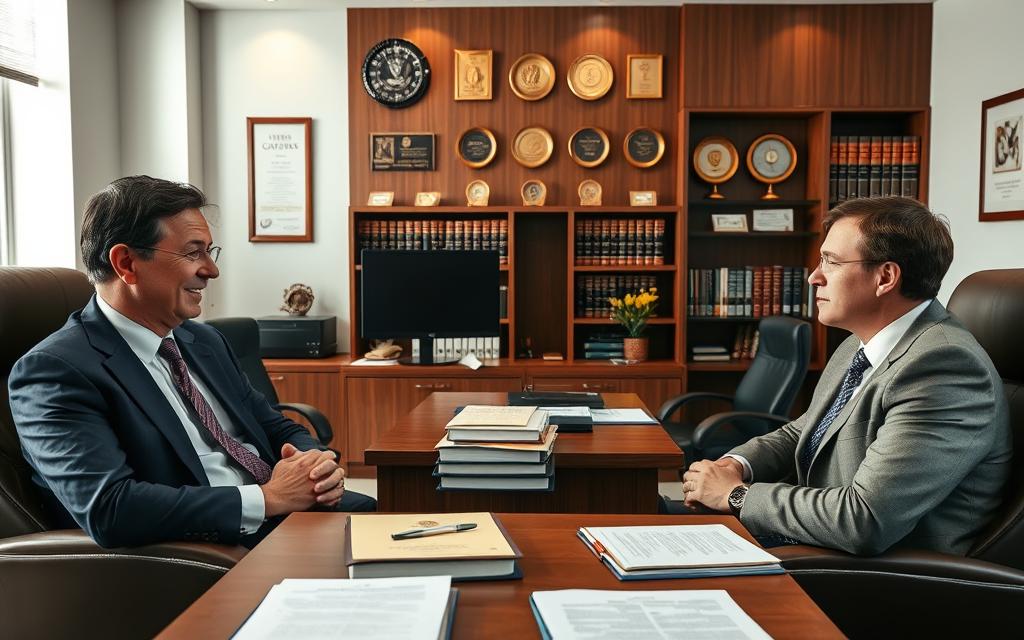
Client-focused teams deliver distinct advantages through tailored strategies. Unlike general practitioners, specialists invest time understanding each person’s unique circumstances. One recent case involved meticulous reconstruction of a bicycle accident scene to prove liability.
| Focus Area | Standard Team | Specialized Team |
|---|---|---|
| Case Preparation | Basic documentation | Medical expert collaboration |
| Client Communication | Periodic updates | 24/7 availability |
| Resource Network | Local contacts | National specialist access |
People facing neural harm need advocates who speak both medical and legal languages. Top firms maintain partnerships with neurologists and life care planners. These connections helped secure $3.8 million for a chef whose balance issues ended his career.
Clear communication forms the foundation of effective representation. Regular check-ins ensure clients understand each phase while preserving energy for recovery. Many appreciate how teams simplify complex terms without oversimplifying risks.
Comprehensive care extends beyond courtroom victories. Successful outcomes often involve securing funds for adaptive vehicles or home modifications. This holistic approach helps people rebuild independence while holding responsible parties accountable.
Proven teams operate on contingency fees, removing financial barriers to justice. Free consultations allow immediate case reviews without upfront costs. For those navigating uncertain futures, this support becomes a lifeline toward stability.
Local Expertise in Seattle and Surrounding Areas
When facing complex legal challenges after an accident, geographic knowledge becomes as crucial as legal expertise. Our team serves clients across Puget Sound communities including Seattle, Everett, Tacoma, and Olympia. This hyperlocal focus ensures we understand neighborhood-specific risks – from Rainier Avenue collision patterns to waterfront property hazards.
Service Areas and Community Focus
Practicing exclusively in Washington State gives us unmatched insight into regional court systems. We navigate King County’s filing deadlines and Pierce County’s jury tendencies with precision. Recent successes include a $1.9 million settlement for a Burien resident involving negligent construction site management.
| Focus Area | Local Advantage | Outcome Impact |
|---|---|---|
| Regulatory Knowledge | WA-specific safety codes | Faster liability proof |
| Jury Experience | Predict local attitudes | Stronger negotiations |
| Medical Partnerships | UW Medicine collaborations | Credible damage proof |
Our community-centered approach means clients never feel like case numbers. We’ve helped Renton teachers secure classroom accommodations and Tukwila warehouse workers obtain safety reforms. These efforts create lasting protections beyond individual compensation.
Local regulations demand specific evidence handling – dashcam footage from I-5 accidents requires different protocols than rural collision documentation. Our team’s familiarity with regional insurance adjusters prevents lowball offers. Seven recent cases involving negligence in Kent apartment complexes demonstrate this edge.
Proximity allows frequent in-person meetings while preserving your energy for recovery. Let our Seattle-based team turn local insights into actionable results. Immediate help protects both health and legal rights.
Integrating Medical and Legal Expertise for Recovery
True healing after life-altering events demands more than isolated efforts—it requires synchronized expertise. Medical teams restore physical function while legal professionals safeguard financial stability. Together, they create comprehensive support systems addressing both immediate needs and future challenges.
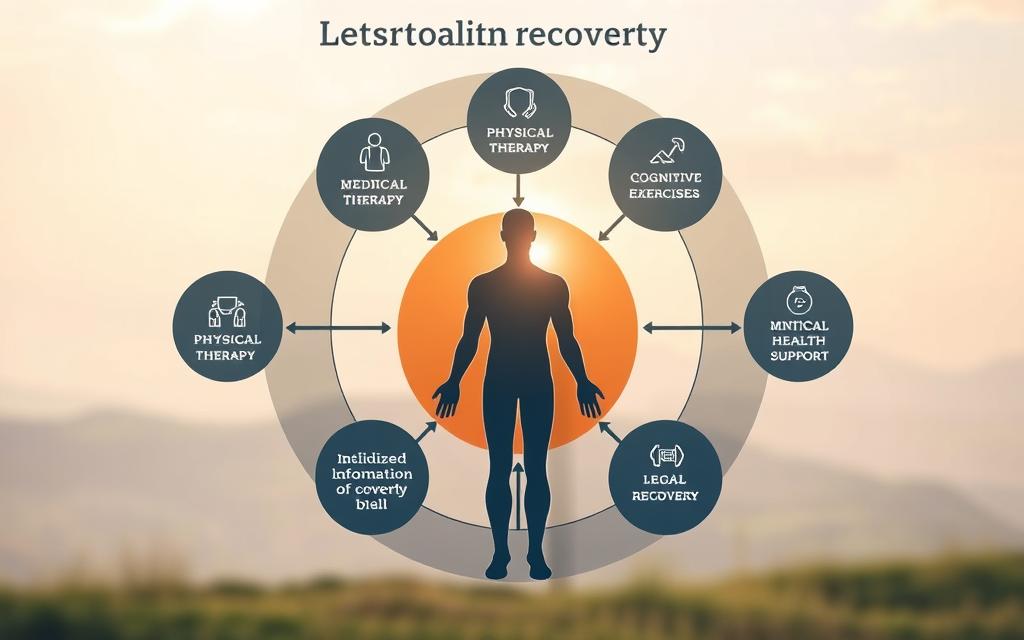
Families gain critical resources through this partnership. Caregivers receive training on symptom management, while legal experts secure funds for adaptive technologies. One teacher returned to work after therapists redesigned her classroom setup—paid for by a settlement negotiated alongside her treatment plan.
Long-term life impacts shape every strategy. Vocational counselors collaborate with lawyers to calculate lost career potential. Neurologists provide testimony linking cognitive changes to accident causes. This dual focus helped a chef regain independence through kitchen modifications funded by his compensation.
Starting the recovery process today ensures access to evolving solutions like virtual reality therapy or AI-assisted communication tools. Delays risk missing deadlines for evidence collection or treatment breakthroughs. Proactive planning transforms uncertainty into actionable steps toward stability.
Integrated teams turn fragmented care into coordinated progress. Their combined insights help families navigate complex systems while building unshakable claims. The right support today reshapes what’s possible tomorrow.
What to Expect During Your Legal Consultation
How does preparation shape success in complex injury cases? Your first legal meeting lays the groundwork for recovery by transforming confusion into clear action plans. This collaborative session focuses on understanding your unique situation while mapping pathways to justice.
The Initial Meeting Process
Specialists begin by listening to your story – from accident details to current challenges. They’ll ask targeted questions about:
- Timing and location of the incident
- Medical treatments received
- Changes in work or family responsibilities
Bring accident reports, medical bills, and insurance correspondence. This helps attorneys spot critical evidence gaps. Many firms offer free initial reviews, letting you explore options risk-free.
Case Evaluation and Next Steps
Legal teams analyze three core elements during assessment:
- Medical documentation proving injury severity
- Evidence establishing fault or negligence
- Financial impacts on current/future stability
Expect transparent discussions about possible outcomes. One client’s case evaluation revealed hidden camera footage that doubled their settlement offer. Professionals explain how state laws affect timelines – some regions require claims within 12 months.
Personalized strategies emerge from this deep analysis. Your team might partner with vocational experts to calculate lost earnings or neurologists to document cognitive changes. This thorough approach ensures all life impacts get addressed, not just immediate bills.
Understanding the consultation process helps build confidence. As highlighted in this strategic legal guidance resource, early planning often determines case success. Schedule your review today to protect both health and legal rights.
Recent Success Stories and Verdicts
Real courtroom victories reveal how strategic advocacy transforms lives disrupted by sudden events. Our team’s results demonstrate what happens when legal precision meets relentless dedication to client recovery.
Case Results That Make a Difference
Three landmark settlements showcase our approach to securing life-changing compensation:
| Case Details | Legal Strategy | Client Impact |
|---|---|---|
| $40M Truck Accident | Reconstructed collision using black box data | Funded 24/7 care for spinal trauma |
| $11M Delivery Crash | Exposed faulty brake maintenance records | Paid for smart home adaptations |
| $12.6M Plant Explosion | Partnered with industrial safety experts | Secured family’s financial future |
These outcomes stem from meticulous evidence analysis and medical collaboration. One client regained independence through voice-activated home systems funded by their settlement. Another accessed experimental therapies not covered by insurance.
The effects extend beyond dollar amounts. Families report restored stability and access to cutting-edge rehabilitation tools. Trauma specialists helped one young father return to work through customized cognitive training.
Every case receives the same rigorous attention – whether resolving through mediation or jury trial. Our $1.5+ billion recovery history proves no challenge is too complex when lives hang in the balance.
Resources and Support for Brain Injury Victims
Rebuilding independence after neurological harm requires more than medical treatment—it demands access to specialized support systems. Comprehensive care plans address physical recovery while helping families navigate new challenges.
Rehabilitation and Ongoing Care Programs
Modern therapy options combine clinical expertise with adaptive technologies. Key services include:
- Physical retraining: Balance exercises and motor skill development
- Cognitive therapies: Memory enhancement techniques using digital tools
- Sensory integration: Programs addressing vision changes or speech difficulties
Specialized clinics now offer light therapy for visual processing issues and voice-assisted devices for communication challenges. These resources help bridge gaps between hospital care and daily living.
Community and Financial Support Resources
Local organizations provide essential lifelines for families. Support groups connect people facing similar memory or pain management struggles. Financial assistance programs often cover:
| Resource Type | Coverage | Access Point |
|---|---|---|
| Vocational Training | Job skill development | State rehabilitation centers |
| Home Modifications | Safety adaptations | Medicaid waivers |
| Transportation Aid | Ride services | Nonprofit partnerships |
Our team helps clients find answers through national networks like the Brain Injury Association of America. We connect survivors with speech pathologists and pain specialists while pursuing compensation for these services. This dual approach ensures lasting support beyond legal resolutions.
Conclusion
Navigating the aftermath of an accident is overwhelming, but you don’t have to face it alone. Specialized injury lawyers bridge the gap between medical recovery and legal justice, ensuring every detail strengthens your case. Early action preserves evidence while documenting needs—critical steps when time impacts both health and compensation.
If a loved one suffered harm due to someone else’s negligence, immediate legal guidance protects their rights. Over 3,000 resolved cases prove how meticulous preparation secures lifelong care funds. Local teams combine regional expertise with medical partnerships to address hidden costs and future stability.
Contingency-based services remove financial barriers, letting you focus on healing. Every aspect matters—from safety violations to vocational impacts. Proven strategies turn complex challenges into actionable solutions.
Don’t wait. Contact an injury lawyer today to explore your options. When someone else’s negligence upends lives, we fight to rebuild them. Your recovery deserves justice—act now to secure it.