
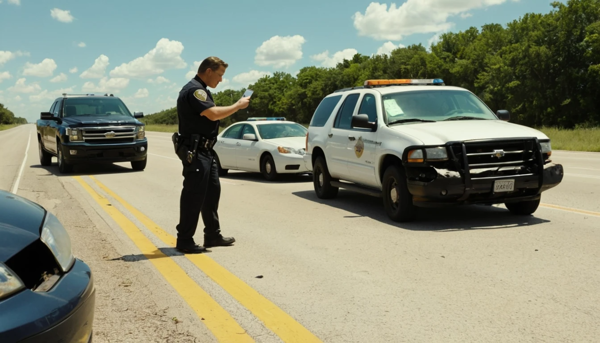
Is Texas at-fault or no-fault state? Learn how car accident laws work, who pays for damages, and how to protect your rights after a crash in Texas.
Car accidents can be overwhelming, physically, emotionally, and financially. One of the first questions people ask after a collision is: “Who pays for the damages?” This question becomes even more crucial in a state like Texas, where car accident laws may significantly affect your right to compensation.
If you’re involved in a crash in Texas, understanding how car accident liability works can help you make informed decisions about filing a claim or hiring a Texas car accident lawyer. This guide explains whether Texas is a fault or no-fault state, how its auto insurance laws work, and what your rights are if you’ve been injured.
Table of Contents
Is Texas an At-Fault or No-Fault State?
Texas is an at-fault state for car accidents. This means the person who causes the accident is financially responsible for the damages they cause. If another driver hits you and is found at fault, their insurance company must pay for your vehicle repairs, medical bills, lost wages, and other accident-related costs.
In contrast, no-fault states require drivers to use their own insurance coverage (Personal Injury Protection or PIP) regardless of who caused the crash. In Texas, this is not the case. Determining fault is central to how claims are handled.
What Does “At-Fault” Mean in Texas?
The at-fault system in Texas follows the principle of tort liability. Under this system:
- The at-fault driver’s insurance is used to pay for damages.
- Injured parties have the right to pursue compensation from the responsible party.
- Fault is established based on evidence, police reports, witness statements, and insurance investigations.
This system provides an opportunity to recover full compensation, but it also means you must prove the other party’s negligence to succeed in a claim.
Modified Comparative Fault Rule in Texas
Texas uses a modified comparative fault rule, also known as the 51% Bar Rule. This law allows you to recover damages only if you are 50% or less at fault for the accident.
- If you are 51% or more at fault, you cannot recover any compensation.
- If you are partially at fault (say 30%), your compensation is reduced by that percentage.
Example: If your damages are $100,000 but you’re found 30% at fault, you can recover only $70,000.
Texas Auto Insurance Laws: What You’re Required to Carry
To comply with Texas auto insurance laws, drivers must carry liability insurance that covers:
- $30,000 for bodily injury per person
- $60,000 for total bodily injury per accident
- $25,000 for property damage per accident
This minimum coverage is often called 30/60/25 coverage.
However, these limits may not be enough in serious accidents. That’s why many drivers purchase additional coverage such as:
- Uninsured/Underinsured Motorist (UM/UIM)
- Personal Injury Protection (PIP)
- Medical Payments Coverage
- Collision and Comprehensive Coverage
What to Do After a Car Accident in Texas
If you’re involved in a car accident in Texas, you should:
- Call 911 and report the accident.
- Get medical attention, even if you don’t feel hurt immediately.
- Exchange information with the other driver.
- Take photos of the accident scene, vehicles, and any visible injuries.
- File a police report, especially if there are injuries or significant damage.
- Notify your insurance company.
- Contact a Texas car accident lawyer to protect your legal rights.
The more documentation you collect, the easier it will be to prove liability and recover compensation.
When to Hire a Texas Car Accident Lawyer
Even if your accident seems minor, it’s wise to consult an experienced Texas car accident lawyer when:
- You have serious injuries
- The insurance company denies or delays your claim
- There’s a dispute about who is at fault
- You’re being blamed unfairly
- You’re offered a settlement that seems too low
A skilled lawyer can investigate the accident, gather evidence, and negotiate with insurers on your behalf.
A Baytown car accident lawyer helps injured drivers seek compensation after crashes caused by negligence. They gather evidence, negotiate with insurers, and protect your rights during stressful legal situations. Choosing experienced legal support can improve your chances of fair compensation and smoother recovery.
How Fault Is Determined in a Texas Car Accident
Establishing fault is essential in any claim in an at-fault state like Texas. Evidence commonly used includes:
- Police accident reports
- Dashcam or surveillance footage
- Eyewitness statements
- Vehicle damage reports
- Cell phone records (to determine distracted driving)
- Accident reconstruction analysis
In some cases, more than one party can share fault, which is where comparative negligence rules apply.
Texas Car Accident Statistics
Understanding the landscape of road safety in Texas puts the legal framework into perspective. Here are some notable statistics:
- According to the Texas Department of Transportation (TxDOT), in 2023 there were over 15,000 serious injury crashes on Texas roads, resulting in more than 18,800 people sustaining serious injuries.
- The Texas A&M Transportation Institute reports that distracted driving accounted for nearly 1 in 5 accidents in Texas, highlighting the importance of proving negligence in such cases.
These numbers demonstrate how common and serious auto accidents are in Texas—and why understanding liability laws is crucial.
Can You Sue After a Car Accident in Texas?
Yes, you can sue the at-fault driver after a car accident in Texas. However, lawsuits are often the last resort if insurance negotiations fail.
In Texas, the statute of limitations for personal injury lawsuits is two years from the date of the accident. Failing to file within this window could bar you from receiving compensation altogether.
Common Damages You Can Claim
If you’re not at fault, you can claim several types of damages under Texas law, including:
- Medical expenses (emergency care, surgery, rehabilitation)
- Lost income and earning capacity
- Property damage
- Pain and suffering
- Emotional distress
- Loss of enjoyment of life
For serious or permanent injuries, the value of your claim can be significantly higher. An experienced attorney can help calculate the true value of your damages.
Is Texas a No-Fault State for Auto Insurance?
No. Texas follows an at-fault system, meaning the driver who caused the crash is financially responsible for the damages.
What Happens if Both Drivers Are at Fault in Texas?
Texas uses comparative negligence. If both drivers share fault, the one with the greater percentage (over 50%) cannot recover compensation.
Do I Have to Report a Car Accident in Texas?
Yes. You must report an accident if there are injuries, fatalities, or property damage exceeding $1,000. Failing to report may result in fines or license suspension.
Can I Still File a Claim If I Was Partially At Fault?
Yes, as long as your share of the fault is 50% or less, you can still file a claim for damages, though your payout will be reduced accordingly.
How Can a Car Accident Lawyer Help in Texas?
A personal car accident lawyer can help prove the other party’s fault, calculate fair compensation, negotiate with insurance companies, and take legal action if necessary.
Final Thoughts: Know Your Rights in an At-Fault State
Understanding that Texas is an at-fault state is vital for anyone involved in a car accident. This system gives you the right to seek full compensation from the negligent driver, but it also requires you to prove liability and navigate complex insurance laws.
Whether you’re filing an insurance claim or preparing to take legal action, don’t go it alone. An experienced Texas car accident lawyer can be your strongest advocate, ensuring you get the compensation you deserve while you focus on recovery.
Need Legal Help After a Crash?
Consult a qualified Texas car accident lawyer today to protect your rights and secure the compensation you’re entitled to under Texas law.
FAQs: Is Texas At-Fault or No-Fault State
1. Is Texas an at-fault state for car accidents?
Yes, Texas is an at-fault state. The driver who causes the crash must pay for damages. You must prove who was at fault to get compensation.
2. What if both drivers are partly at fault in Texas?
Texas follows the 51% Bar Rule. You can get paid if you’re 50% or less at fault. Your payout is reduced based on your share of fault.
3. What auto insurance is required in Texas?
Texas law requires minimum liability coverage of 30/60/25. This means $30K per person, $60K per accident, and $25K for property damage. More coverage is recommended.
4. Can I sue after a car accident in Texas?
Yes, you can sue the at-fault driver if insurance doesn’t cover all your losses. You must file within 2 years of the crash. A lawyer can help you win fair compensation.
5. Do I need a lawyer after a car accident in Texas?
A lawyer is helpful when injuries are serious or fault is disputed. They’ll protect your rights, prove fault, and handle tough insurance negotiations. This can help you get the best payout.