Ever wonder why some condo places are peaceful while others fight a lot? Knowing how to solve condo disputes can make a big difference. It can turn a place of conflict into a place of peace.
Condo groups help manage shared spaces. When many owners share areas, problems can arise. But, with the right steps, these issues can be solved smoothly.
It’s not about who wins in condo disputes. It’s about finding solutions that work for everyone. By using legal steps, communities can stay positive and peaceful.
Table of Contents
Key Takeaways
- Understand the legal framework of condo association disputes
- Recognize the importance of clear communication
- Learn systematic approaches to conflict resolution
- Explore multiple resolution strategies beyond litigation
- Protect individual and collective rights within the community
Understanding Condo Association Disputes
Living in a condo can lead to problems. It’s important to know how to handle these issues. Knowing the rules and talking well are key to peace in a condo.
Condo associations help keep things running smoothly. They make and enforce rules for everyone. This includes how to take care of things and how to act in common areas.
Common Causes of Disputes
First, we need to know why problems happen. The main reasons include:
- Noise complaints from neighbors
- Parking and vehicle restrictions
- Pet policy violations
- Maintenance and repair disagreements
- Financial assessment disputes
The Role of the Condo Association
Condo associations are the heart of condo living. They do many important things:
- Creating and updating bylaws
- Managing common property maintenance
- Collecting necessary fees and assessments
- Enforcing community rules fairly
Importance of Conflict Resolution
Ignoring problems can lead to big issues. It’s better to solve problems early. This way, we avoid big fights and legal troubles.
| Dispute Type | Impact Level | Recommended Action |
|---|---|---|
| Noise Violations | Moderate | Written warning, mediation |
| Financial Disputes | High | Formal review, payment plan |
| Maintenance Issues | Critical | Professional assessment, repair coordination |
Knowing how things work helps us solve problems better. We can talk things out and find solutions that work for everyone.
Legal Framework for Dispute Resolution
Understanding condo ownership law is key. It’s about knowing the rules that help solve problems. These rules protect everyone in the community.
The laws for condo associations are very important. They guide how to solve disputes and set rules for living together.
Relevant Laws and Regulations
Condo associations follow many laws. These include:
- State-specific condominium laws
- Federal housing regulations
- Local municipal ordinances
- Fair housing guidelines
Rights and Responsibilities of Unit Owners
Knowing your rights is important. It helps everyone get along. Key rights are:
- Right to review association documents
- Right to participate in association meetings
- Right to vote on big decisions
- Protection from unfair treatment
Governing Documents Overview
The heart of condo law is in the documents. These papers set the rules for living together. Important documents are:
- Declaration of Covenants, Conditions, and Restrictions (CC&Rs)
- Bylaws
- Rules and regulations
- Articles of incorporation
Knowing these laws helps condo owners deal with problems. It keeps the community safe and fair.
Initial Steps in Dispute Resolution
Dealing with condo board conflicts needs a smart plan. Knowing the first steps to solve disputes is key for peace in communities.
Fixing HOA disputes starts with a clear process. Owners facing issues with their condo association should take these important first steps:
- Gather all important documents about the dispute
- Look over the condo association’s rules
- Make a detailed timeline of events
- Write a clear and simple statement
Open Communication and Dialogue
Talking directly is often the first step in legal help for HOA disputes. Residents should talk to board members in a professional way. Written communication provides a paper trail that can be useful later.
Reviewing Association Rules
It’s important to know the rules of your condo community. Each place has its own rules about what’s okay, how to take care of things, and how to solve problems. Look at these documents to see if your concern is valid and what you can do about it.
Documenting the Dispute
Keeping good records is very important in condo board conflicts. Make a detailed record that includes:
- Dates of incidents
- Specific rule violations
- Copies of all communications
- Photographic or video evidence
If talking and trying to solve it on your own doesn’t work, you might need legal help. A good record helps your case and shows clear evidence if you need to go to mediation or court.
Mediation in Condo Disputes
Dealing with condo disputes needs smart plans to keep the community together. Mediation is a great way to solve problems without going to court.

Mediation is a way to solve big problems in a fair way. It lets everyone work together to find solutions that everyone can agree on.
Benefits of Mediation
- Cost-effective conflict resolution
- Faster dispute settlement
- Preserves neighborly relationships
- Confidential proceedings
- Flexible problem-solving approach
How Mediation Works
A neutral person helps guide talks between those in conflict. Everyone works together to find solutions that work for all.
| Mediation Stage | Key Actions |
|---|---|
| Initial Consultation | Discuss dispute details and mediation ground rules |
| Joint Discussion | Each party presents perspective and concerns |
| Problem-Solving | Generate possible solutions |
| Agreement Development | Make a solution that everyone agrees on |
Selecting a Mediator
Picking the right mediator is important. Look for someone with experience in condo disputes and good communication skills.
- Verify professional credentials
- Check specialized housing dispute experience
- Request references from previous cases
- Confirm neutrality and impartiality
Good mediation turns fights into talks. This helps condo communities stay peaceful and respectful.
Arbitration as a Conflict Resolution Method
Condo associations often face complex disputes. Arbitration is a strong choice for solving these problems. It offers a fair way to manage conflicts.
Arbitration is a middle ground between mediation and court. It lets parties present their cases to a neutral arbitrator. The arbitrator then makes a final decision.
Understanding Arbitration Dynamics
The arbitration process has several steps:
- Choosing a qualified arbitrator with condo law knowledge
- Both sides present evidence
- A hearing like a court
- The arbitrator makes a final decision
Advantages of Choosing Arbitration
Arbitration has many benefits for HOA fines challenges:
- It’s cheaper than going to court
- It solves problems faster
- Proceedings are private
- It has flexible rules
Selecting the Right Arbitrator
When picking an arbitrator, look for someone with condo law experience. They should know HOA rules well and be fair.
Good arbitration needs good preparation and clear talks. With the right strategy, condo issues can be solved well.
The Role of a Condo Attorney
Dealing with complex rules and fee disputes in condos can be tough. Homeowners and condo groups often need legal help. This is when a condo attorney is very important.
Condo lawyers know a lot about condo laws. They help solve problems between owners and the condo group. They do this with great skill and knowledge.
When to Seek Legal Counsel
Knowing when to get a condo lawyer is key. Here are some times when you might need one:
- When community rules keep causing problems
- When there are big disputes about condo fees
- If there are possible rule violations
- When there are big money disagreements
- If you think you might go to court
How Attorneys Provide Support
Good condo lawyers help a lot. They do things like:
- Looking over contracts and documents carefully
- Giving advice on how to solve problems
- Helping with talks and negotiations
- Preparing legal papers
- Telling you about legal plans
Preparing for Legal Action
To get ready, you need to collect all your documents. This includes emails, money records, and condo rules. Lawyers say it’s good to keep everything in order.
Choosing a lawyer who knows condo law is smart. They can help solve your condo’s specific problems better.
Navigating Financial Disputes
Financial disputes can make living in condos hard. It’s key to know how to solve these problems. This keeps everyone living together well.
Condo groups must balance money needs with fairness to all owners. When money issues get mixed up, problems can start.
Assessing Fees and Assessments
When looking at condo fees and assessments, people should:
- Check detailed financial statements
- See how regular costs are spent
- Know why special fees are needed
- Look at how money has been used before
Handling Late Payments
Late payments need a clear plan. Condo groups usually have a set way to handle money problems:
- Send a first warning letter
- Have a step-by-step penalty system
- Consider taking legal action
- Talk about payment plans
Confronting Special Assessments
Special assessments can be very hard on owners’ wallets. It’s important to know why these fees are charged. When a special assessment is suggested, owners should:
- Ask for all the details
- Make sure it follows the law
- Know what it’s for
- Look at payment options
If damage happens to another unit, the condo might add repair costs to fees. This shows why clear money talks are important.
Enforcing Condo Association Rules
Living in a condo can be tricky. Rules help keep things nice and fair. But, knowing how to enforce them is key.
To enforce rules well, you need a clear plan. This plan must balance what’s good for everyone with what’s fair for each person. When filing complaints, following the right steps is important.
Rule Enforcement Procedures
Here’s how condos usually handle rule breaking:
- First, a written warning is sent.
- Then, a formal notice of the problem.
- Next, fines might be given.
- After that, meetings to make sure rules are followed.
Consequences of Non-Compliance
If someone keeps breaking rules, they might face:
- Fines.
- Not being able to use common areas.
- Going to court.
- Liens on their property.
Protecting Owner Rights
Even when rules are enforced, owners have important rights:
- Right to a formal hearing.
- Chance to show evidence.
- Way to appeal if they disagree.
- Protection from unfair treatment.
Good rule enforcement means being open, fair, and respecting everyone’s property rights.
Board Responsibilities in Dispute Resolution
Condo association boards are key in solving HOA disagreements. They keep peace and protect everyone’s rights.
Duty to Act Impartially
Board members must be fair in solving conflicts. They should:
- Look at all sides fairly
- Not let personal feelings get in the way
- Think about what’s best for the community
- Make sure rules are the same for everyone
Documenting Board Meetings
Keeping accurate records is very important. It makes things clear and protects everyone.
| Meeting Documentation Elements | Purpose |
|---|---|
| Detailed Minutes | Record key discussions and decisions |
| Voting Records | Track resolution of common area usage disputes |
| Action Item Tracking | Follow up on community concerns |
Communication with Unit Owners
Being open and talking early can stop problems. Boards should:
- Keep everyone updated
- Make it easy to talk to them
- Answer questions quickly
- Have meetings for the community
Good board management turns problems into chances for growth and understanding.
Formal Complaints and Grievances
Dealing with condo rules disputes can be tough for owners. Knowing how to file a formal complaint is key. An attorney for condo owners can help a lot when problems come up.
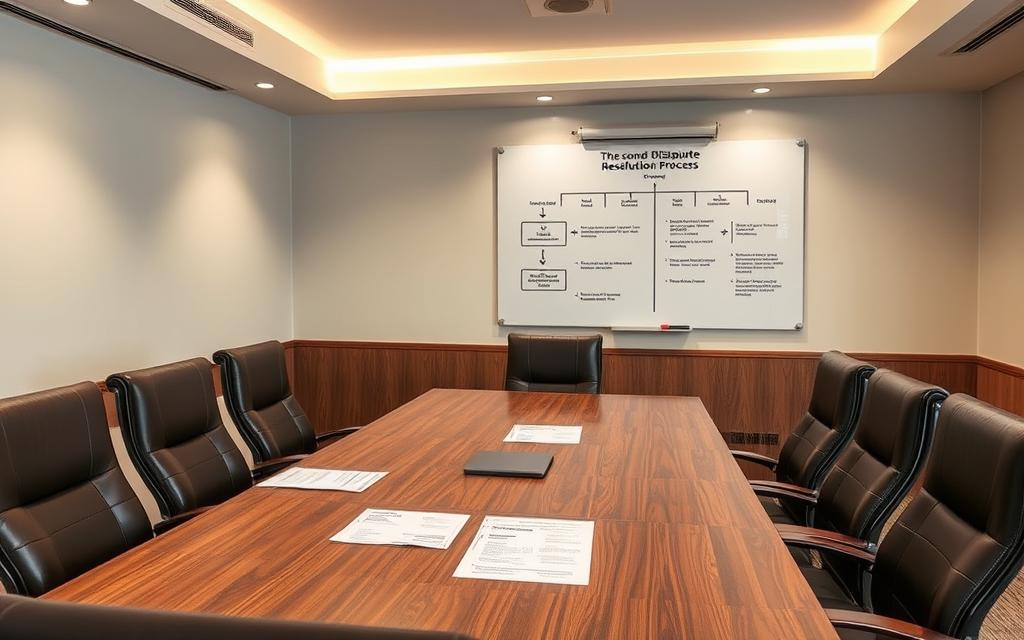
Condo associations have rules for handling complaints. You need to document everything well and plan carefully. This helps get a fair outcome.
Filing a Complaint: Essential Steps
- Write down the problem clearly
- Collect any proof you have
- Check the condo bylaws
- Send a formal complaint to the board
- Ask for a confirmation of receipt
Expected Complaint Outcomes
When you file a formal grievance, you might see different solutions. The outcome depends on the issue’s type and how serious it is.
| Complaint Type | Potential Resolution | Typical Timeframe |
|---|---|---|
| Rule Violation | Written Warning | 1-2 Weeks |
| Financial Dispute | Payment Plan | 2-4 Weeks |
| Serious Conflict | Mediation/Arbitration | 4-8 Weeks |
Timeframes for Resolution
Most condo associations try to solve complaints quickly and openly. An attorney for condo owners can speed things up if usual steps don’t work.
- First response in 10 business days
- First look into it in 30 days
- Final answer usually in 60-90 days
Getting help from a lawyer who knows community association law is very helpful. They make sure your rights are looked after and you get a fair deal.
Alternative Dispute Resolution Strategies
Fixing problems in a condo community needs smart plans. These plans keep HOA member rights safe and solve disputes peacefully. Good ways to solve problems can help people avoid expensive lawsuits.
Starting to solve disputes means knowing how to work together. People can use several important ways to fix problems:
- Open and clear talk
- Listening well to everyone
- Thinking about what’s good for the community
- Finding solutions that work for everyone
Collaborative Problem Solving
Collaborative problem solving is about making sure everyone is heard and respected. Interest-based negotiation helps people look at the real issues, not just their own side.
Negotiation Techniques
Good negotiation skills can turn problems into chances for the community to grow. Important techniques include:
- Finding common goals
- Keeping people separate from the issue
- Coming up with many solutions
- Using facts to decide
Community Involvement in Resolutions
Getting the whole community involved can really help solve problems peacefully. Holding community meetings, starting open talks, and keeping communication clear can stop problems from getting worse.
Using these strategies, condo communities can become stronger and more united. They focus on understanding each other and working together for everyone’s good.
Understanding the Litigation Process
Disputes in condo associations can lead to legal action. This happens when other ways to solve problems fail. Litigation is a structured way to handle complex legal issues.

When to Consider Litigation
Litigation is needed in certain situations:
- Repeated violations of community bylaws
- Significant financial disputes
- Structural damage or safety concerns
- Unresolvable board-member conflicts
The Litigation Timeline
The legal process for HOA conflicts has several stages:
- Initial complaint filing
- Discovery phase
- Potential settlement negotiations
- Court proceedings
- Potential appeals
Potential Outcomes of Litigation
Litigation can lead to different results:
- Monetary damages
- Injunctive relief
- Mandatory policy changes
- Precedent-setting decisions
Litigation is a big step. It should be taken with legal advice and understanding the possible outcomes.
Preventative Measures for Future Disputes
Being proactive can really help avoid fights in condo communities. Knowing how to stop HOA disputes early helps everyone live better together.
Good condo groups know it’s better to stop problems before they start. They use smart plans to keep peace and make everyone happy.
Effective Communication Strategies
Talking clearly is the first step to avoiding fights. Everyone needs to talk openly and share news.
- Create dedicated communication platforms
- Develop clear reporting mechanisms
- Encourage open dialogue
Regular Community Meetings
Regular meetings are key for talking and solving problems. They keep things clear and stop small issues from getting big.
| Meeting Type | Frequency | Purpose |
|---|---|---|
| Quarterly Town Hall | Every 3 months | Community updates and feedback |
| Board Business Meeting | Monthly | Operational discussions |
| Annual General Meeting | Yearly | Financial review and elections |
Enhancing Community Engagement
Getting involved makes the community stronger and fights less likely. There are many ways to help out.
- Join community committees
- Participate in social events
- Volunteer for community improvement projects
Being active and talking clearly are important for a peaceful condo community.
Conclusion: Achieving Harmony in Condo Living
Fixing HOA problems needs a smart plan. It’s about finding a balance between personal rights and community needs. Everyone must understand each other and talk clearly to solve problems together.
The HOA mediation process is a great way to solve issues early. It helps avoid expensive legal fights. By working together, we can make our community stronger.
Good problem-solving is more than just following rules. It’s about talking openly, being clear, and working towards common goals. Everyone should join in community meetings and talk about important decisions.
Your help is very important. You can make a difference by going to meetings, joining discussions, or finding mediation. Always remember to communicate and respect each other for a happy community.