
Ever wondered how someone can legally own a property they don’t own? Squatters rights in my city are more complex than you think. The rules of adverse possession law are very detailed.
Local laws on squatters are interesting. They let people claim property if they live there long enough. This idea has been around for a long time and challenges old ways of owning property in the U.S.
Knowing these laws is important for everyone. It’s not just for property owners or squatters. It’s for anyone who cares about real estate law. Squatters rights can change how we think about property in big cities and small towns.
Table of Contents
Key Takeaways
- Squatters rights exist in all 50 U.S. states
- Adverse possession laws have historical roots dating back to medieval England
- Local regulations significantly impact squatting claims
- Property ownership can be legally challenged through specific occupancy conditions
- Understanding these laws protects both property owners and potentially occupants
Understanding Squatters Rights in the United States
Squatters rights are a complex part of property laws in the U.S. Many people find them confusing. These rights let people claim property they don’t own.
The idea of squatters rights is called adverse possession. It’s a way for people to get property rights by living there in certain ways. To understand how squatters get rights, we need to look at some key legal points.
Definition of Squatters Rights
Squatters rights are laws that let people who don’t own property claim it under certain conditions. The process of removing squatters gets tricky when they meet these legal requirements.
- Unauthorized occupation of abandoned or unused property
- Continuous residence for a designated period
- Open and visible presence on the property
- Payment of property taxes in some jurisdictions
Historical Context
Squatters rights started from old homesteading laws. These laws wanted to encourage people to use and settle land. They thought using land was better than leaving it empty.
| Time Period | Legal Perspective | Property Rights Focus |
|---|---|---|
| Colonial Era | Limited Property Protections | Encourage Land Settlement |
| 19th Century | Expanded Adverse Possession Laws | Promote Agricultural Development |
| Modern Era | Strict Legal Requirements | Protect Property Owner Interests |
Importance of Local Laws
Property laws change a lot from state to state and city to city. Each place has its own rules for squatters. Knowing these laws is very important.
Understanding these laws helps property owners keep their property safe. It also gives a clear way for people to claim property under certain conditions.
The Legal Framework Governing Squatters
Understanding squatter rights needs deep insight into property laws. The legal status of squatters varies across the United States.
Unlawful occupancy laws are complex. They protect both property owners and those who might occupy a property.
Adverse Possession Explained
Adverse possession is a key legal doctrine. It lets someone claim ownership of abandoned property under certain conditions. This principle allows a person to own a property by occupying it for a long time without permission.
- Requires continuous occupation of the property
- Must be open and visible occupation
- Occupation must be actual and exclusive
- Typically requires occupation for 5-30 years depending on state laws
Variations in State Laws
Each state has its own rules about squatters’ rights. The rules for adverse possession vary a lot.
| State | Occupation Period | Additional Requirements |
|---|---|---|
| California | 5 years | Payment of property taxes |
| New York | 10 years | Written document claiming ownership |
| Texas | 3-10 years | Color of title requirement |
Key Legal Terms to Know
Knowing squatter legal terms is important. It helps in property disputes. Key terms include:
- Color of Title: A document that looks like it owns a property but is not valid
- Constructive Possession: Legal concept of having possession without being there
- Statute of Limitations: Legal time limit for claiming property rights
Property owners and those who might occupy need to know these terms. It helps protect their rights and understand legal issues.
Rights and Responsibilities of Squatters
Understanding state squatter laws is key. Squatters have rights and risks that owners need to know. This is different from regular tenants.
Squatters and tenants have big legal differences. Squatters can’t be kicked out by police right away. They must follow legal steps.
Occupancy Rights
Squatters might have rights in certain cases. They do this if they:
- Stay on the property for a long time
- Fix up the property
- Pay for property costs
- Act like they own it
Maintenance Obligations
Squatters must take care of the property. They should:
- Keep the place in good shape
- Stop the property from getting worse
- Pay for basic upkeep
- Avoid big damage
Legal Risks Involved
It’s important to know the legal risks of squatting. Getting an eviction notice can lead to big problems:
| Legal Risk | Potential Consequence |
|---|---|
| Criminal Trespassing | Potential Misdemeanor Charges |
| Property Damage | Civil Liability |
| Adverse Possession Claim | Legal Property Transfer Possibility |
Squatters need to know their legal rights. This helps avoid legal trouble and protects their rights to the property.
How to Establish Rights as a Squatter
Understanding adverse possession laws is key for squatters. They must follow a specific legal path that changes by state.

The time needed to claim property is important. Most states say you must stay for 10 to 30 years.
Duration of Occupancy Requirements
When squatters meet certain rules, landowners have fewer options. The main points are:
- Continuous and uninterrupted property occupation
- Open and visible presence on the property
- Exclusive use of the property
- Actual physical possession
Filing for Adverse Possession
Squatters need to document their stay well. This involves several steps:
- Gather detailed records of living there
- Show you paid property taxes (in some places)
- Prove you really thought you owned it
- Get ready to file legal papers
Importance of Documentation
Keeping good records is vital for squatters. They should keep:
| Document Type | Purpose |
|---|---|
| Utility Bills | Prove you lived there |
| Property Tax Receipts | Show you invested financially |
| Maintenance Records | Indicate you cared for the property |
| Witness Statements | Confirm you stayed long-term |
Knowing the law well is important. Each state has its own rules. Getting help from a lawyer is a good idea for squatters.
The Role of Property Owners
Property owners face big challenges with unauthorized people. They need smart ways to stop squatters and know their legal rights.
Squatters can make legal problems for property owners. Quick action is key to stop illegal claims on your property.
Rights of Property Owners
Property owners have important rights against unauthorized people:
- Do regular checks on your property
- Make sure empty places are safe
- Keep records of any trespassing
- Know the laws in your area
Eviction Process
Getting squatters out needs careful legal steps. Here’s what property owners must do:
- Give a written notice to leave
- Start formal eviction actions
- Get court permission to remove
- Work with local police
Legal Actions Property Owners Can Take
Smart legal steps can help protect your property. You can:
- File quiet title actions
- Go after trespassing charges
- Ask for money damages
- Ask for your property to be fixed
Being proactive and acting fast is the best way to deal with unwanted people on your property.
Common Misconceptions About Squatting
Many people get confused about urban squatter rights. This confusion happens because of misunderstandings about housing laws. It leads to myths about who owns property and who is protected.
It’s important to know the difference between squatting and trespassing. Tips for protecting property start with understanding these differences.
Squatting vs. Trespassing: Key Differences
- Trespassers are on a property briefly and don’t plan to stay long
- Squatters stay long-term and want to live there
- Removing trespassers and squatters is done differently
Myths About Property Ownership
| Common Myth | Reality |
|---|---|
| Squatters can instantly claim property | They need lots of legal papers and time to own it |
| Property owners have no immediate recourse | They can legally kick out squatters |
Misunderstanding Legal Protections
Some think housing laws protect all squatters. But, the truth is, laws change by place and situation. Property owners need to know their local laws to deal with squatters.
Talking to a local real estate lawyer can clear up these legal issues. It helps property owners protect their land the right way.
Local Ordinances Affecting Squatters
Understanding local laws is hard for both property owners and squatters. Each place has its own rules about trespassing and squatting.
Local laws make things complicated. It’s key to know these rules if you’re dealing with squatters.
Zoning Laws and Squatter Rights
Zoning laws are important. They tell us how we can use and live on property. Different areas have different rules for squatters:
- Residential zones have strict rules
- Commercial areas have their own rules
- Mixed-use zones are very complex
Health and Safety Codes
Health and safety laws help both squatters and property owners. They make sure properties are safe and well-kept. These laws can:
- Make sure properties are well-maintained
- Need a quick check of the property
- Help remove people who shouldn’t be there
Impact of Local Government Policies
Cities handle squatters differently. Here’s how some cities deal with squatters:
| City | Squatter Policy Approach | Legal Complexity |
|---|---|---|
| New York City | Strict Regulations | High |
| Los Angeles | Moderate Enforcement | Medium |
| Chicago | Balanced Approach | Low-Medium |
Property owners and squatters need to look up local laws. This helps them know their rights.
How to Navigate Disputes
Dealing with legal fights between property owners and squatters needs a smart plan. You must know the local laws well. The rules about squatters are complex and need careful thought and expert help.

Handling squatter removal can be a big legal problem. It needs special steps and help from experts.
Mediation Options
Mediation is a way to avoid expensive court fights. Owners and squatters can work together to solve issues. They can use:
- Professional mediation services
- Community dispute resolution centers
- Legal advice from property lawyers
Legal Representation
Finding the right lawyer is key in squatter disputes. Owners should look for lawyers who know about:
- Real estate lawsuits
- Adverse possession cases
- Protecting property rights
Documentation of Claims
Winning a case depends on good evidence. Important documents include:
- Proof of owning the property
- Showing you kept the property in good shape
- A clear timeline of when the squatter moved in
- Statements from people who saw the squatter
Property owners must act fast to keep their rights safe. They should gather evidence well and get legal help.
Resources for Squatters
Understanding property rules is hard. Squatters need help and knowledge. They can find many resources to protect their rights and get advice.
Learning about evicting squatters and property rights is easier with help. Special support networks offer important help.
Local Advocacy Groups
Groups help people with property issues. They give important help like:
- Legal advice
- Workshops on rights
- Education programs
- Help for those without homes
Legal Aid Societies
Legal help is free or cheap for squatters. Important groups include:
| Organization | Services Offered | Geographic Focus |
|---|---|---|
| National Housing Law Project | Legal research, policy advocacy | National |
| Housing Rights Initiative | Free legal consultations | Urban centers |
| Community Legal Services | Tenant defense representation | Local jurisdictions |
Community Support Networks
Mutual aid groups and community groups help a lot. They offer:
- Info on emergency housing
- Support groups
- Help finding resources
- Help with legal stuff
Knowing about these resources helps people make good choices about their rights.
Case Studies: Squatters Rights in Action
Real-world examples show us a lot about squatter legal status. They help us understand the complex world of unlawful occupancy laws. These examples show how different places handle abandoned property rights.
Legal fights over squatters’ rights show how tricky property law is in the U.S. Knowing about these cases helps both property owners and people who might want to live there.
Notable Court Cases That Shaped Squatters’ Rights
- California’s Steven DeCaprio used adverse possession laws to take over an empty property
- In New York, a case showed how important it is to keep occupying a property
- A Texas ruling said you need to have the right papers to claim property rights
Lessons from Successful Claims
Successful claims usually have a few things in common:
- They keep occupying the property without stopping
- They take care of the property
- They improve the property in some way
- They meet the time rules set by the state
Failed Claims: Critical Insights
Looking at failed claims teaches us important lessons. Not having the right papers, stopping to occupy, or not meeting state rules often means a claim is thrown out.
| Jurisdiction | Claim Status | Primary Reason for Failure |
|---|---|---|
| Florida | Rejected | Insufficient proof of continuous occupation |
| Illinois | Dismissed | Lack of property tax payments |
| California | Successful | Comprehensive documentation |
These examples show how complex squatters’ rights can be. Getting legal advice is very important when dealing with these laws and property claims.
Trends in Squatting and Property Laws
The rules about squatting are changing fast. This is because of big city housing problems in the U.S. Laws about who can live where are getting more complex. This is due to money issues and changes in how people live together.
Now, laws about who can stay in a house are getting more detailed. This makes it harder for house owners to deal with people who shouldn’t be there.
Current Events Impacting Squatting Laws
Big city housing problems have changed squatting laws a lot. Important things include:
- More careful checks on adverse possession claims
- Tighter rules for showing you live in a place
- Better legal help for house owners
Future Predictions for Squatters Rights
Experts think squatting laws will keep getting better. They see a few big changes coming:
- Legal steps will be easier to follow
- More use of digital proof of living
- Local governments will play a bigger role
The Influence of Housing Crises
Housing prices that are too high are changing the laws. Cities are finding new ways to solve this problem. They want to help both house owners and people looking for a place to live.
How to Educate Others About Squatters Rights
Spreading the word about squatters rights is key. It helps people know about property laws. This knowledge helps communities deal with property issues.
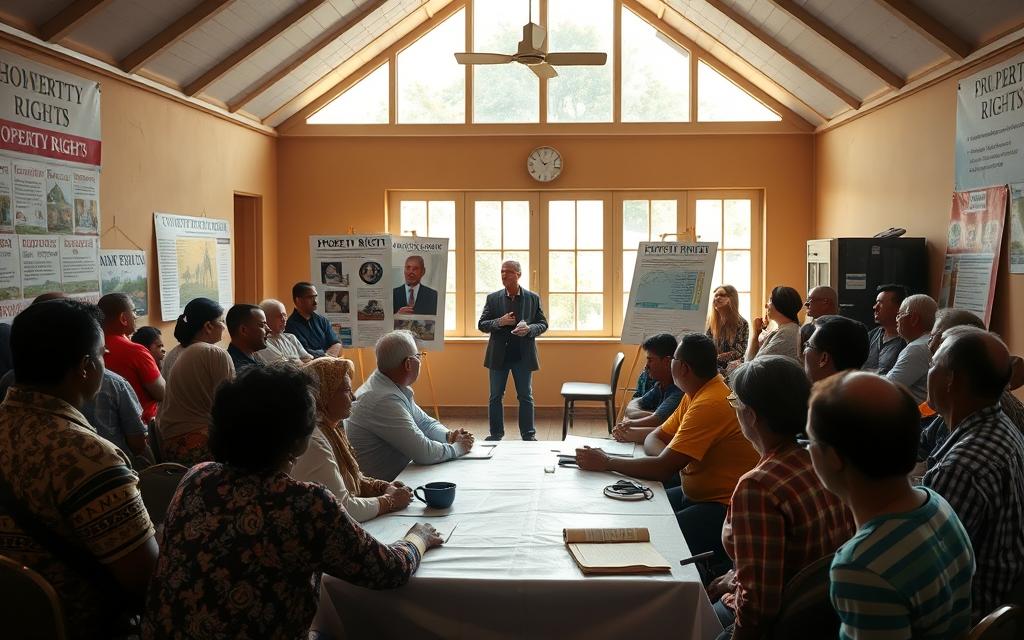
Teaching about property rights needs smart ways. We must make hard legal stuff easy and fun to learn.
Organizing Community Workshops
Workshops are great for talking about property rights. They should:
- Have local real estate lawyers talk
- Use fun, interactive ways to teach
- Make the timeline for adverse possession clear
- Use real-life examples to teach
Creating Informative Materials
Creating educational stuff helps share property law info. Think about making:
- Legal guides that are easy to read
- Infographics on squatters rights
- Short videos explaining things
- Online webinars
Building Awareness Through Social Media
Social media is great for sharing legal info. Creating smart content can make property rights easy to understand. It helps more people learn about their rights.
Make sure your content is easy to share. Break down hard legal stuff into simple bits for everyone.
Conclusion: Be Informed and Know Your Rights
Understanding squatters’ rights is complex. Property owners must watch out for squatters. They need to know how to protect their homes.
Legal rules about squatters vary by place. Some places make it hard for squatters to stay. Others give them more rights. Owners should learn about local laws and check their property often.
Getting help from a lawyer is important. They can guide owners on how to keep their property safe. Keeping records and knowing the law helps fight squatters.
Knowing a lot about property rights is key. Owners should talk to local groups and keep up with new laws. This way, they can handle squatters better.